


What is the Enigmalift Facelift?
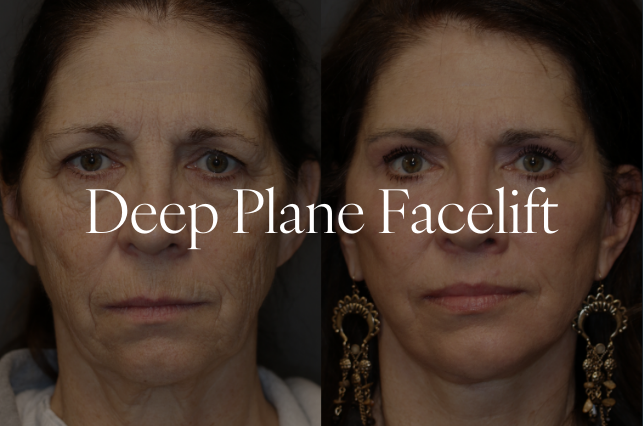
Most people who come in asking about a facelift aren't asking for drama. They're not chasing a different face. They want their face back. The one that felt familiar, that communicated the way they actually feel, that didn't create a disconnect every time they looked in the mirror.
That's a different goal than what older facelift techniques were designed to achieve. And it requires a different approach.
What a Deep Plane Facelift Actually Does
The history of facelift surgery is, in large part, a history of getting closer to the right problem.
The earliest facelifts worked on skin alone. Pull it tighter, trim the excess, suture it in a new position. The results looked surgical immediately and aged poorly over time, which is where the "windswept" look that most people associate with obvious facelifts came from. The skin was tighter. Nothing underneath had changed.
The deep plane changed that. Instead of working on the surface, a deep plane facelift operates within the deeper structural layer of the face, beneath the SMAS (Superficial Musculoaponeurotic System), the fibromuscular sheet that connects the skin to the underlying facial muscles. At this depth, the key retaining ligaments of the face can be released. These are the structures that anchor the soft tissue and resist repositioning. When they're released, the entire soft tissue unit (fat pads, musculature, overlying skin) can move as a single cohesive structure rather than having layers pulled independently in different directions.
The result is a face that looks repositioned, not tightened. The proportions restore. The movement stays natural. The skin drapes the way it should because the structure underneath is supporting it correctly.
The EnigmaLift: What Makes It Different
The EnigmaLift is the deep plane facelift technique I developed through years of cross-disciplinary training with leading surgeons across the country, refined continuously through clinical practice and a genuine obsession with long-term outcomes.
It is deep plane in its foundation, meaning the dissection goes beneath the SMAS, the retaining ligaments are released, and the soft tissue is repositioned as a unit. But the philosophy behind it goes further than technique.
The goal is never obvious change. It's the restoration of structural balance, identity, and the kind of facial ease that makes someone look rested and right, not operated on. That requires understanding not just how to perform the surgery, but how the face communicates: how the fat pads interact with the muscles that move them, how the brain interprets the proportions and movement of a face, and what the difference is between a result that looks natural a decade from now versus one that looks surgical within a year.
Restraint is part of the technique. Knowing what not to do, what not to overcorrect, what not to remove, what to leave undisturbed, is as important as the dissection itself.
Who This Is For
A deep plane facelift is most appropriate for patients experiencing structural descent. For example, the fat pads have moved from where they used to live, the midface has begun to flatten, the jawline has softened, the deeper folds have deepened in ways that reflect structural change rather than just surface aging.
It is not the right answer for every face or every stage of aging. Patients with early or primarily qualitative changes, such as skin quality, texture, subtle volume loss, are often better served by a non-surgical approach first, or a combination of fat transfer and laser resurfacing that addresses the tissue without operating on the structure. The right recommendation always depends on what's actually happening anatomically, not on what someone has decided they want before they've been evaluated.
For patients whose primary concern is the neck, like banding, laxity, submental fullness, the facelift alone does not address that. Our Deep Plane Facelift & Neck Lift combines both procedures for patients where the structural changes extend below the jaw.
Recovery
Recovery from a deep plane facelift is more manageable than most patients expect, and at Clinic 5C it is treated as part of the procedure, not an afterthought.
The first one to two weeks involve swelling, tightness, and the early stages of healing. What the face looks like at this stage is not what it will look like at three months, or at one year. The tissue needs time to settle, and the deeper the dissection, the more meaningful the final result when it does.
Recovery at Clinic 5C is actively supported with hyperbaric oxygen therapy, red light therapy, and IV nutrition, all of which are chosen for their specific effects on tissue healing, inflammation, and vascular support. These aren't add-ons. They're part of how we think about optimizing outcomes from the inside.
What to Expect
The results of a well-executed deep plane facelift are structural and durable. The midface restores. The jawline clears. The deep folds soften because the tissue has been repositioned rather than simply filled. The face looks balanced in a way that reads as natural to everyone around you, without announcing that anything was done.
Because the deeper structural layers were addressed, the results hold differently than skin-only or SMAS-level approaches. The tissue ages from a better starting point. The improvements are measured in years, not months.
The goal is a face that looks like you, at your best, fully rested, in complete alignment with how you actually feel.
Frequently Asked Questions
Is a deep plane facelift more invasive than a traditional facelift?
It requires a deeper dissection, which is technically more demanding. But "invasive" in the sense that matters to patients (recovery time, visible scarring, disruption to daily life) is not significantly greater than older techniques when performed correctly. The trade-off is a more meaningful, more durable result.
Will I look like myself afterward?
That is the explicit goal. A facelift that changes the character of your face, alters your expressions, or creates an obviously surgical appearance is a failure of judgment, not a success of technique. The EnigmaLift is designed to restore structural balance while preserving everything that makes your face recognizably yours.
How long do results last?
Deep plane results are among the most durable in facelift surgery because the structural causes of aging are addressed, not just their surface expression. Most patients maintain meaningful improvement for a decade or more, with the face continuing to age from a significantly better baseline.
What if I'm also concerned about my neck?
The facelift alone addresses the face: the midface, jawline, and lower face. For neck laxity, banding, or submental fullness, our Deep Plane Facelift & Neck Lift combines both in a single procedure for patients whose concerns extend below the jaw.
Ready to understand what's actually happening in your face and what can be done about it? Start your journey at Clinic 5C.
.avif)
Ready to begin your wellness journey?
Fax: (844) 961-3417